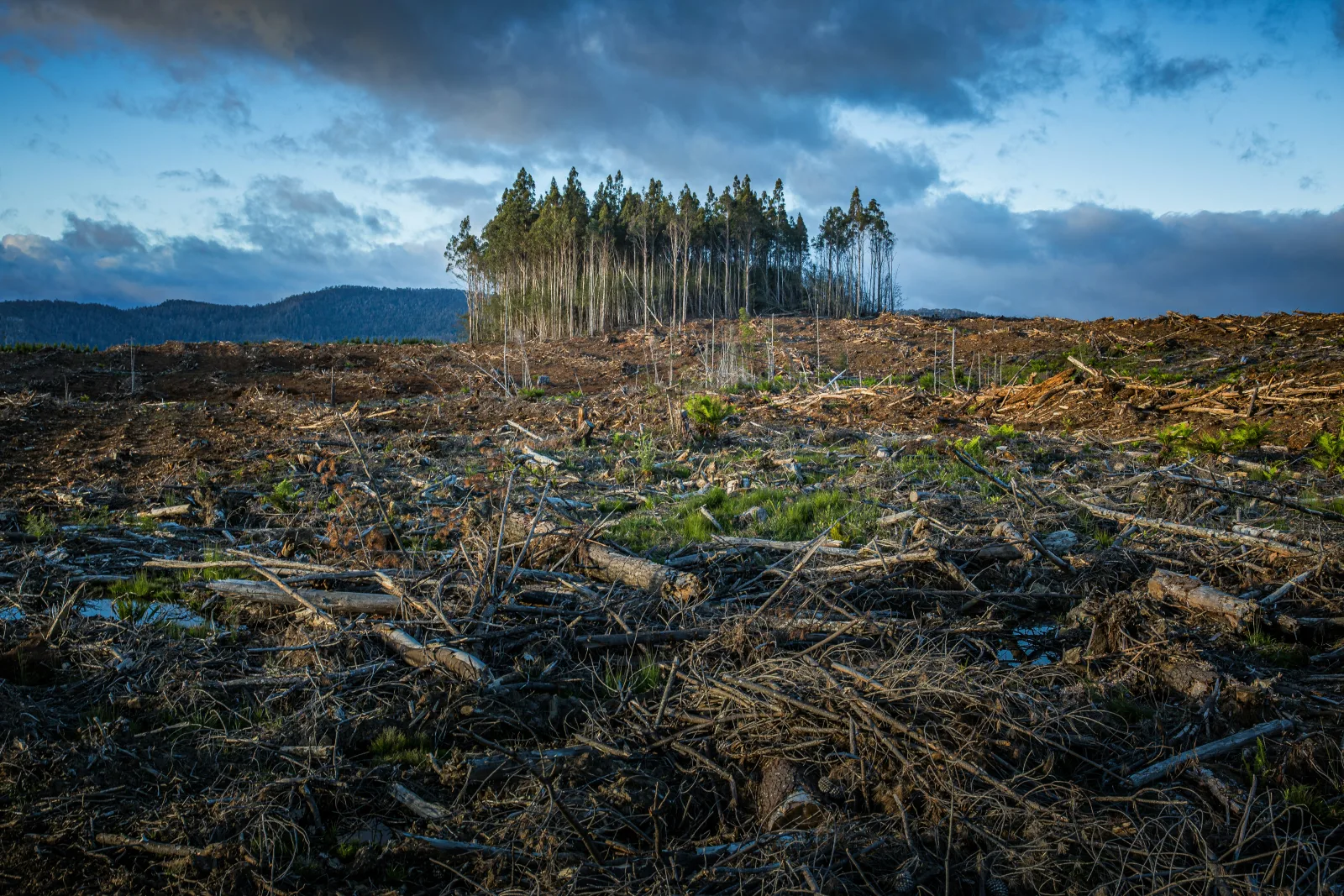
Key Definitions: Deforestation, Forest Degradation, and the Cut-Off Date
Key takeaway
Definitions determine everything
Three definitions in Article 2 of the EUDR are central to understanding what compliance actually requires: the definition of forest, the definition of deforestation, and the definition of forest degradation. Together with the cut-off date of 31 December 2020, they determine precisely which land uses trigger the regulation's prohibitions.
What Is a "Forest" Under the EUDR?
The EUDR adopts the FAO's widely used definition of forest. A forest is land spanning more than 0.5 hectares with trees higher than 5 metres and a canopy cover of more than 10%, or trees able to reach those thresholds in situ.
Two clarifications are explicit in the definition:
- The definition excludes land that is predominantly under agricultural or urban land use. A grove of trees within an active farm does not constitute a forest for regulatory purposes.
- The definition includes areas temporarily without tree cover due to human intervention or natural causes, provided they are expected to recover. A recently logged area that will regenerate is still classified as forest.
Analogy
The forest definition is about function, not just appearance
A common misconception is that a forest must look dense and pristine to qualify. Under the FAO definition, a relatively open woodland with 10% canopy cover still qualifies as a forest if trees are taller than 5 metres and the land is not primarily used for agriculture or urban purposes. This means that many areas of African woodland, Brazilian Cerrado, and open tropical woodland that might not look like "forest" to a casual observer are still legally classified as forest for EUDR purposes.
Deforestation: Conversion Is the Key Word
Under Article 2 of the EUDR, deforestation means the conversion of forest to agricultural use, whether human-induced or not. Three elements of this definition are worth examining carefully:
- Conversion: The land use must change permanently from forest to something else. Temporary clearing followed by forest regrowth is not deforestation under this definition.
- To agricultural use: The converted land must be put to agricultural use. A forest converted to a mine, a road, or an urban area is not covered by the EUDR (though it may be covered by other legislation). The focus on agricultural use reflects the regulation's commodity-specific scope.
- Whether human-induced or not: A forest destroyed by wildfire and subsequently converted to farmland counts as deforestation even though the initial forest clearance was natural. What matters is the ultimate land use, not the mechanism of forest loss.
Worked example
Three scenarios: which counts as deforestation under the EUDR?
Scenario A: A farmer clears 50 hectares of forest in January 2021 to plant soybeans. This IS deforestation under the EUDR: it occurred after the cut-off date, the conversion is to agricultural use, and the land is now subject to EUDR requirements for any soy produced on it.
Scenario B: A forest is struck by wildfire in March 2021, killing all trees. The land remains unfarmed and trees begin to regenerate naturally. This is NOT deforestation under the EUDR because there is no conversion to agricultural use.
Scenario C: A forest is struck by wildfire in March 2021. The owner then clears the burned area in June 2021 and plants coffee. This IS deforestation: the wildfire triggered the opportunity for agricultural conversion, and it occurred after the cut-off date.
Forest Degradation: Specific to Wood Products
The EUDR introduces a second concept that applies specifically to wood products: forest degradation. Article 2 defines forest degradation as structural changes to forest cover taking the form of conversion of:
- Primary forests or naturally regenerating forests into plantation forests or other wooded land; or
- Primary forests into planted forests.
In practice, this means that harvesting wood from a primary forest and replacing it with a monoculture plantation constitutes forest degradation, even if no agricultural conversion occurs. The forest remains "forest" in physical appearance but has been fundamentally transformed from an ecologically complex primary ecosystem into a managed plantation.
Forest degradation is relevant only for wood products in the EUDR. For the other six commodities (cattle, cocoa, coffee, oil palm, rubber, and soya), only deforestation matters, not forest degradation. This asymmetry reflects the different supply chain dynamics: wood harvesting can occur without full clearance, whereas agricultural commodity production typically requires complete forest removal.
The Cut-Off Date: 31 December 2020
The single most important numerical parameter in the EUDR is the cut-off date: 31 December 2020. No relevant commodity or product may be placed on the EU market or exported if it was produced on land that was subject to deforestation or forest degradation after this date.
This is a strict liability standard in practice: it does not matter that the operator did not personally commit the deforestation, did not know about it, or purchased from an intermediary. If the land from which the commodity originates was deforested after 31 December 2020, the commodity cannot legally enter the EU market without a valid due diligence statement confirming the contrary.
| Scenario | Production Land Status | EUDR Compliant? |
|---|---|---|
| Coffee farm established in 2015 on land cleared in 2014 | Cleared before cut-off date | Yes, if legally produced |
| Palm oil plantation expanded into forest in March 2021 | Cleared after cut-off date | No |
| Cattle ranch on land cleared in 2019 | Cleared before cut-off date | Yes, if legally produced |
| Soy farm on land cleared from Cerrado in 2022 | Cleared after cut-off date | No |
| Timber from primary forest converted to plantation in 2021 | Forest degradation after cut-off | No (wood products) |
Why Was 31 December 2020 Chosen?
The choice of 31 December 2020 as the cut-off date was deliberate and linked to several policy reference points. It aligns with the EU's Biodiversity Strategy 2030, which was adopted in 2020 and established ambitions for nature protection from that year. It also precedes the Glasgow COP26 in 2021, where deforestation commitments were made, and it captures the period of elevated deforestation that characterised 2017-2020 in several key producing countries.
The cut-off date also reflects a practical logic: it needed to be recent enough to be meaningful (preventing operators from relying on decades-old land use data) but not so recent that the overwhelming majority of existing supply chains would be non-compliant from day one, making the regulation operationally unworkable.
The EU Timber Regulation (EUTR) focused on the legality of timber harvesting: was the wood cut in accordance with the laws of the country of production? A country might legally permit the clearance of large areas of tropical forest if its domestic law allowed it. Under the EUTR, legally permitted deforestation was not a problem.
The EUDR takes a fundamentally different approach. Even if a country legally permits the conversion of forest to agriculture, products from that conversion cannot enter the EU market if the conversion occurred after 31 December 2020. The regulation establishes an international environmental standard that operates independently of the laws of the producing country. This is more ambitious but also more legally complex: it requires operators to track land use history, not just legal permits.
At the same time, the EUDR retains a legality requirement: production must comply with the relevant laws of the country of production, including land use rights, environmental protection, labour law, and indigenous peoples' rights. So the EUDR effectively combines both the EUTR's legality standard and a higher deforestation-free standard on top of it.
Key Takeaways
- The EUDR uses the FAO definition of forest: land over 0.5 hectares with trees taller than 5 metres and canopy cover above 10%, excluding predominantly agricultural or urban land
- Deforestation means conversion of forest to agricultural use, whether human-induced or not; temporary clearing without agricultural conversion does not qualify
- Forest degradation (conversion of primary or naturally regenerating forest to plantation forest) is relevant only for wood products, not the other six commodity groups
- The cut-off date is 31 December 2020: any land deforested or degraded after this date produces commodities that cannot legally enter the EU market
- The cut-off date standard operates independently of the laws of the producing country, meaning that legally permitted forest clearance after 31 December 2020 still disqualifies the resulting commodity from the EU market
Knowledge Check
Test what you just learned
3 questions · check each one as you go
Under the EUDR, which of the following constitutes 'deforestation'?
The EUDR concept of 'forest degradation' applies to which commodity group?
What is the EUDR's cut-off date, and what does it mean for a soy producer?