Sector-Specific Challenges
Key takeaway
Why this matters
The EUDR applies a common framework to seven very different commodity sectors. Each sector has distinct supply chain structures, geographies, industry actors, and deforestation dynamics that create unique compliance challenges. A timber trader, a palm oil refiner, a cattle leather importer, and a coffee roaster all face the same regulation but encounter it through different operational realities. Understanding the sector-specific landscape helps practitioners apply the common framework intelligently to their specific context.
Cattle and Beef: Complexity at Scale
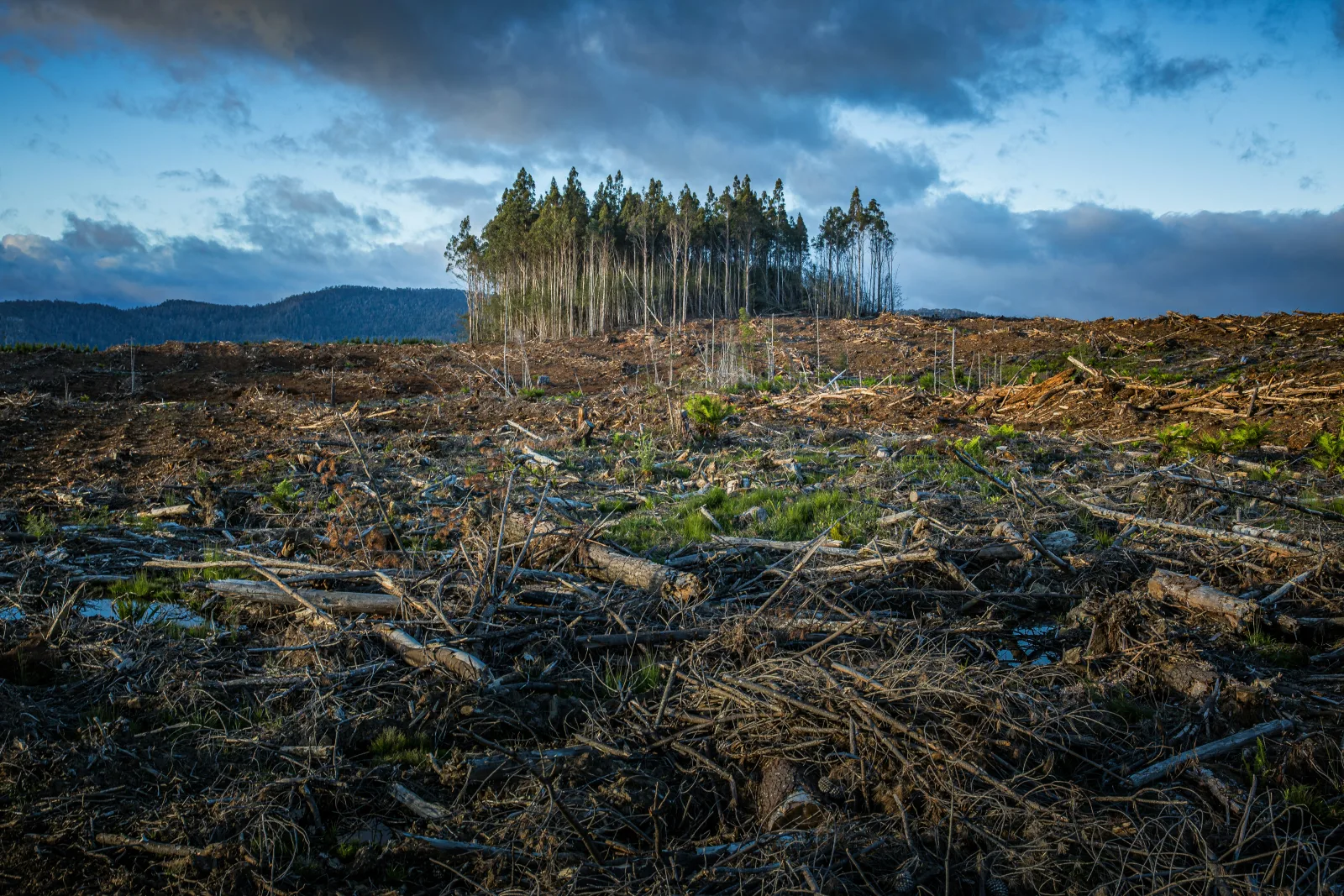
The cattle sector presents some of the most complex EUDR compliance challenges. Brazil alone accounts for approximately 42% of global tropical primary rainforest loss, with cattle ranching as the dominant deforestation driver in the Amazon. EU beef, leather, and collagen imports from Brazil are therefore at the intersection of two formidable challenges: large geographic scale and notoriously complex supply chains.
A key structural problem in Brazilian cattle supply chains is the prevalence of indirect suppliers, often called the "laundering" problem. A calf may be born and raised on a ranch with deforested land, then sold to an intermediate ranch that appears compliant, then slaughtered at a processing plant that exports to the EU. The final exporter may have no visibility into the origin ranch's deforestation history. Addressing this challenge requires traceability systems that track animals through ear tags or electronic identification systems across multiple ownership changes, which Brazil's mandatory cattle traceability system (SISBOV) supports but does not yet universally apply to the entire supply chain.
Analogy
Analogy: Supply Chain Laundering in Finance and Cattle
In financial regulation, money laundering involves moving illicit funds through layers of transactions until the illegal origin is obscured. In cattle supply chains, "laundering" of deforestation-linked cattle works similarly: animals from ranches on recently deforested land are sold to compliant "clean" ranches, then to processors, until the deforestation origin is lost in the chain. The EUDR requires operators to trace back to the farm of origin, not just the immediate supplier, in the same way that financial crime laws require tracing funds back to their original source. This makes animal traceability infrastructure essential to EUDR compliance in the cattle sector.
Cocoa: The Smallholder Aggregation Challenge
West Africa's cocoa sector, with Cote d'Ivoire and Ghana collectively producing approximately 60% of global supply, is characterized by millions of smallholder farms operating through layered intermediary systems. Cocoa travels from individual farmers to local village collectors, to regional aggregators, to port-side processors, to international traders, and finally to European chocolate manufacturers. At each step, product from thousands of farms may be physically mixed.
The key challenges in cocoa are:
- Plot mapping scale: Registering GPS coordinates for millions of individual farm plots requires massive coordinated data collection programs, which the Cote d'Ivoire and Ghana governments have been working to establish but not yet completed at the required scale.
- Deforestation within protected areas: A significant portion of cocoa in Cote d'Ivoire is grown inside officially protected forest reserves, where production is technically illegal. EUDR's legality requirement therefore intersects acutely with the deforestation requirement in the Ivoirian cocoa sector.
- Aggregation and mixing: Traditional cocoa aggregation systems mix product from many farms at early stages, making lot-level traceability extremely difficult without fundamental supply chain redesign.
Palm Oil: Certification Meets New Standards
The palm oil sector already had the most developed voluntary sustainability certification system of all EUDR commodities, through the Roundtable on Sustainable Palm Oil (RSPO) and national schemes such as the Indonesian Sustainable Palm Oil (ISPO) standard and the Malaysian Sustainable Palm Oil (MSPO) standard. Palm oil operators entered the EUDR era with more supply chain data infrastructure than most other sectors.
However, as the regulation makes clear, certification alone is insufficient for EUDR compliance. RSPO certification does not automatically satisfy the geolocation requirement (although RSPO-certified supply chains typically include supply base mapping). ISPO and MSPO are national government schemes whose deforestation standards do not fully align with the EUDR cut-off date requirement. Operators must verify that the specific information requirements, including GPS plot coordinates verified against forest cover data, are met in addition to certification.
Wood and Timber: From EUTR to EUDR
The timber sector was the only sector previously subject to the EU Timber Regulation (EUTR), which came into force in 2013. EUTR operators therefore have more experience with supply chain due diligence than operators in the six new commodity sectors. However, the EUDR raises the bar significantly even for timber, adding:
- The explicit deforestation-free requirement (EUTR focused on legality only, not deforestation)
- Mandatory geolocation of production plots (EUTR did not require GPS coordinates)
- A much broader product scope (including furniture, paper, and printed materials, not just primary wood products)
- A formal country risk classification system with minimum check rates
For tropical timber supply chains, the EUDR requires tracing harvested logs back to specific forest management units, a challenge in countries with informal or illegal logging sectors where chain-of-custody documentation is incomplete.
Coffee and Rubber: Geography and Price Dynamics
Coffee presents a geographically diverse supply chain. Brazil dominates global coffee production with large commercial farms, while Vietnam, Colombia, Ethiopia, and Central America supply significant volumes through predominantly smallholder systems. The deforestation risk profile varies by origin: highland forest conversion for coffee is a growing concern in Ethiopia and parts of Latin America, while Brazil's consolidated coffee regions have lower current deforestation risk.
Rubber supply chains are concentrated in Southeast Asia, with Thailand, Indonesia, and Vietnam as the dominant producers. Indonesia's rubber smallholder sector overlaps geographically with peatland and forest areas that are environmentally critical. Peatland conversion for rubber, while covered under the forest degradation provisions of the EUDR if peatland carries tree cover, raises complex questions about the definition of "forest" as applied to tropical peatland ecosystems.
| Sector | Primary Supply Region | Key EUDR Challenge | Priority Action |
|---|---|---|---|
| Cattle | Brazil, Argentina | Supply chain laundering; indirect supplier traceability | Animal identification systems; direct ranch traceability |
| Cocoa | Cote d'Ivoire, Ghana | Smallholder plot mapping at scale; legality in protected areas | National farm registration; sector deforestation tools |
| Coffee | Brazil, Vietnam, Ethiopia | Varied supply chain structures; smallholder in some regions | Cooperative-level traceability; country-specific approaches |
| Palm oil | Indonesia, Malaysia | Certification vs. EUDR alignment; geolocation of certified supply chains | Upgrade RSPO/ISPO data to include EUDR-compliant geolocation |
| Rubber | Thailand, Indonesia, Vietnam | Peatland and forest definition questions; smallholder fragmentation | Peatland mapping; smallholder cooperative traceability |
| Soya | Brazil, Argentina | Cerrado vs. Amazon risk differentiation; fire-driven deforestation | Sub-national risk classification; biome-specific traceability |
| Wood | Multiple tropical and temperate | Broad product scope including furniture and paper; informal logging | Extended chain-of-custody documentation; FSC/PEFC upgrade |
Processed and Derivative Products
One of the most technically complex compliance challenges across all sectors is how the EUDR applies to processed and derivative products listed in Annex I. A chocolate bar contains cocoa mass, cocoa butter, and potentially milk powder. Palm oil derivatives appear in cosmetics, personal care products, food emulsifiers, and biodiesel. Soy-derived lecithin appears as an ingredient in thousands of processed food products. Leather from cattle hides is used in furniture, automotive interiors, and fashion goods.
For each of these derivatives, the operator placing the product on the EU market must trace the relevant commodity component back to its geographic origin with geolocation data, even when the original agricultural commodity is only a minor ingredient in a complex manufactured product. This creates compliance burdens across industries that have not traditionally engaged with agricultural supply chain traceability, including automotive manufacturers sourcing leather seats, publishers using paper, and cosmetics companies using palm-derived emollients.
Brazil is the world's largest soy exporter, and the EUDR's soy provisions confront the dual challenge of two distinct deforestation hotspots. The Amazon biome, already designated as environmentally critical and subject to Brazil's own deforestation monitoring, is the more visible concern. However, the Cerrado, Brazil's vast tropical savanna biome to the south of the Amazon, also harbors exceptional biodiversity and has experienced extensive conversion for soy cultivation. The Cerrado is not classified as "forest" under the FAO definition used by the EUDR in all cases, depending on vegetation type. The regulation's scope applies to FAO-defined forests, which may exclude some Cerrado vegetation types. Environmental NGOs have argued that limiting the EUDR to forests misses significant biodiversity loss in savannas and other ecosystems; the regulation does include a provision for the Commission to review and potentially extend scope to other natural ecosystems within two years of entry into force.
Key Takeaways
- Each EUDR commodity sector faces distinct challenges: cattle supply chain laundering, cocoa smallholder plot mapping at scale, palm oil certification-to-EUDR alignment, and timber's broader product scope compared to the predecessor EUTR
- The cattle sector's multi-step ranching supply chains create traceability challenges because deforestation-linked animals can be sold to compliant intermediate ranches before slaughter
- Processed and derivative products (chocolate, palm-derived cosmetics, leather automotive seats, soy lecithin in food) bring EUDR obligations to industries far beyond traditional agricultural commodity trading
- Existing certification schemes (RSPO, FSC, Rainforest Alliance) provide useful evidence within due diligence systems but do not substitute for EUDR's specific geolocation and deforestation-free requirements
- The regulation's potential scope extension to other ecosystems (Cerrado, peatlands, mangroves) may significantly expand compliance obligations in future reviews
Knowledge Check
Test what you just learned
3 questions · check each one as you go
What is the 'supply chain laundering' problem specific to the cattle sector under the EUDR?
Which of the seven EUDR commodity sectors had the most developed voluntary sustainability certification system before the regulation came into force?
Why do processed and derivative products (such as chocolate, cosmetics with palm-derived ingredients, or soy lecithin) create particular EUDR compliance challenges?