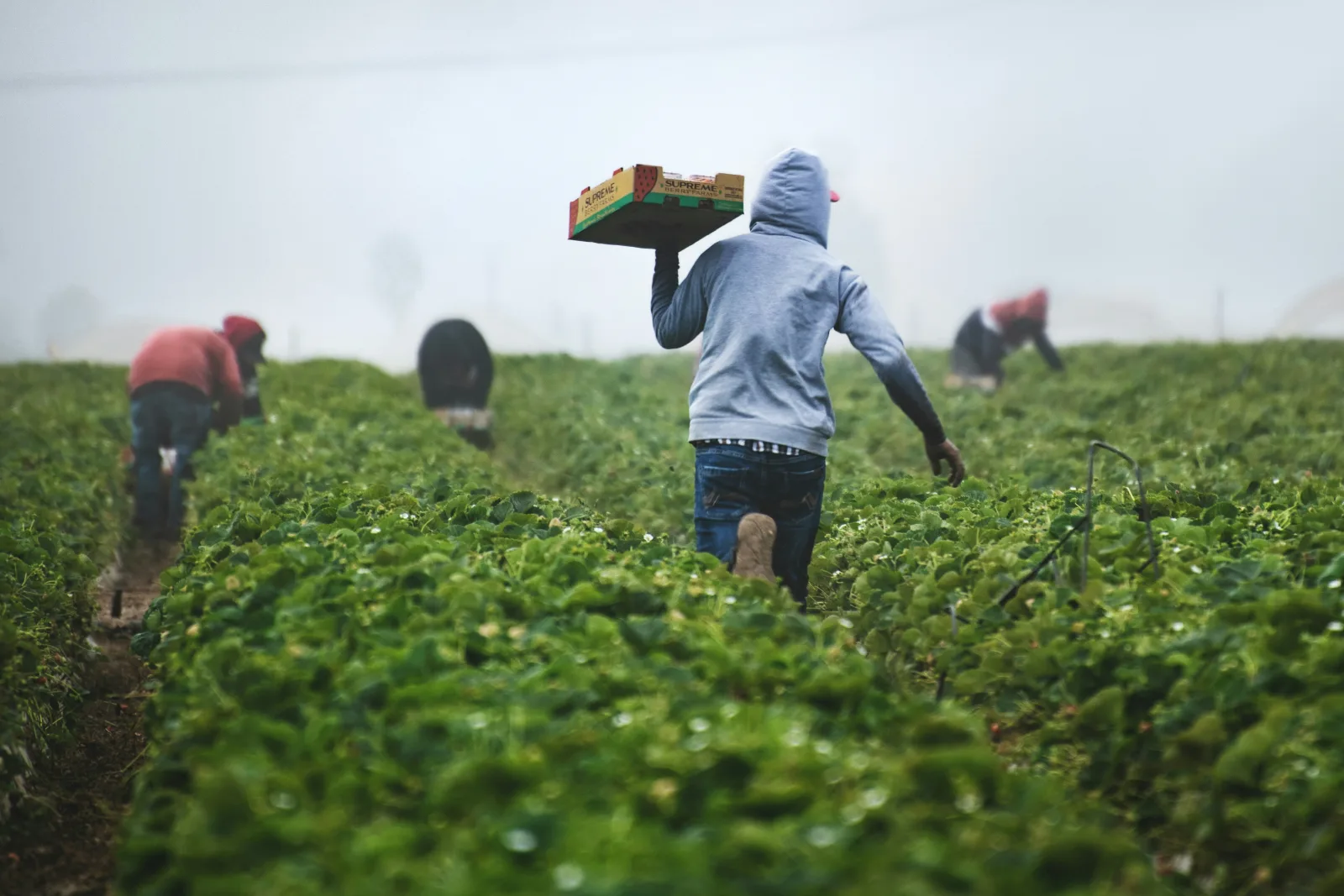
Child Labour
Child labour affects approximately 160 million children worldwide according to ILO and UNICEF estimates from 2020, representing nearly one in ten children globally. After two decades of decline, the trend reversed between 2016 and 2020, with an additional 8.4 million children drawn into child labour. Understanding the international standards, root causes, and detection challenges is essential for companies seeking to meet their responsibility to respect human rights across their supply chains.
The Two Core ILO Conventions
ILO Convention No. 138 on the Minimum Age for Employment (1973) establishes the foundational age standards. Countries ratifying Convention 138 commit to a national minimum employment age that is not less than the age of compulsory schooling and in any case not less than 15 years. A flexibility clause allows developing countries to initially set the minimum at 14. For light work that is not likely to harm a child's health, development, or schooling, the minimum may be set at 13 (or 12 in countries applying the developing-country exception).
ILO Convention No. 182 on the Worst Forms of Child Labour (1999) is the most rapidly ratified convention in ILO history, achieving universal ratification in 2020. It requires the immediate elimination of four categories of work regardless of age up to 18:
- All forms of slavery and practices similar to slavery, including the sale and trafficking of children, debt bondage, serfdom, and forced recruitment for armed conflict
- The use, procuring, or offering of a child for prostitution, pornography, or pornographic performances
- The use, procuring, or offering of a child for illicit activities, particularly drug trafficking
- Work which, by its nature or circumstances, is likely to harm the health, safety, or morals of children ("hazardous work")
Convention 182 is not in tension with Convention 138 - it complements it by identifying an absolute floor of protection that applies to all children under 18, regardless of whatever minimum age thresholds national law sets for other forms of work.
| Type of Work | General Minimum Age | Developing Country Exception |
|---|---|---|
| Full-time employment | 15 years | 14 years |
| Light work (limited hours, non-hazardous) | 13 years | 12 years |
| Hazardous work | 18 years | No exception - 18 applies universally |
| Worst forms (trafficking, armed conflict, etc.) | Prohibited under 18 | No exception |
Scale, Geography, and Sectoral Distribution
Child labour is heavily concentrated in sub-Saharan Africa (72 million children), Central and Southern Asia (5.5 million), and Eastern and South-Eastern Asia (5.5 million). Agriculture is by far the largest sector, accounting for approximately 70% of all child labourers. Within agriculture, cocoa farming in West Africa, tobacco growing across several regions, and small-scale gold mining represent some of the most deeply researched and persistently problematic supply chains.
Child labour is not uniformly distributed across a supply chain. Tier 1 suppliers in formal manufacturing facilities rarely employ children directly - the risk concentrates in informal and artisanal settings, in home-based work given out by factories, in raw material extraction, and in agriculture. A garment factory may have zero child workers on its factory floor while subcontracting embroidery or beading work to home-based workers whose households involve children in the piece-work.
Analogy
Analogy: The Tip of the Iceberg
Standard supplier audits typically see only the tip of the iceberg - the formal factory with its visible workforce. Child labour risks are concentrated in what lies below the waterline: home-based outworkers, informal subcontractors, artisanal mining pits, smallholder farm communities, and family enterprises. A company that audits only its direct Tier 1 suppliers may detect zero child labour, while significant risk exists in the upstream and informal tiers that were never assessed.
Root Causes
Child labour is not primarily a product of negligent suppliers. It emerges from structural conditions that shape the choices available to families and communities. Understanding these root causes is important because they determine what interventions are effective.
- Poverty: When a family's income is insufficient to meet basic needs, children's labour becomes an economic necessity, not a preference. In communities where adults earn less than a living wage, child labour often fills the gap.
- Lack of access to quality education: Where schools are absent, too distant, too costly, culturally inappropriate (particularly for girls), or of poor quality, education offers little competitive value compared to the immediate income from work.
- Demand for cheap labour: Buyers' relentless pressure on prices limits what suppliers can pay adults, creating a structural incentive to use child labour in informal and unregulated settings.
- Weak enforcement: In countries with limited labour inspection capacity or high levels of corruption, the formal prohibition of child labour is not effectively enforced in informal and rural settings.
- Social norms: In some communities, children working in agriculture or family enterprises is seen as an educational and socialization experience, not exploitation. This can obscure the identification and reporting of child labour.
Key takeaway
The Remediation Trap
A company that discovers child labour in its supply chain and responds by immediately terminating the supplier relationship - without providing remediation - may actually worsen outcomes for affected children. If the income from their work was supporting their family, abrupt termination removes that income without replacement, potentially driving children into more dangerous, less visible forms of work. Best practice per the ILO and UNGP framework involves working with the supplier and affected children toward remediation: supporting school enrolment, compensating families for lost income during transition, and monitoring outcomes. Disengagement should be a last resort after remediation efforts have failed.
Age Verification Challenges
Age verification is one of the most persistent operational challenges companies face, particularly in agricultural supply chains in low- and middle-income countries. The challenges include:
- Lack of birth registration: In many rural areas, births are not registered, leaving no official record of a child's age. UNICEF estimates that approximately 237 million children under 5 worldwide have never been registered.
- Document fraud: Where documents exist, suppliers under pressure may obtain fraudulent identity documents giving false ages for child workers.
- Seasonal and informal labour: Children often work seasonally during harvests or school holidays, making them invisible to audits conducted at other times of year.
- Family enterprise exceptions: ILO conventions contain exceptions for light work in family enterprises, which can create ambiguity when children work on family farms that also supply commercial buyers.
Worked example
Example: Cocoa in Ghana and Cote d'Ivoire
Cocoa farming in West Africa employs an estimated 1.56 million children in hazardous work conditions according to a 2020 NORC survey commissioned by the US Department of Labor - an increase from previous estimates despite a decade of industry pledges to reduce child labour. Children carry heavy loads, use machetes, and are exposed to agrochemicals. Root causes include extreme poverty among smallholder farmers (many earning less than $1 per day), lack of access to schools in cocoa-growing regions, and the structure of the cocoa supply chain itself, which involves thousands of small farms aggregated through intermediaries. Industry responses have included the Cocoa and Forests Initiative, community monitoring systems, and direct investment in school construction and adult income enhancement. Progress has been slower than pledged, illustrating that supply-chain-level interventions alone cannot substitute for systemic change in farmer livelihoods and rural infrastructure.
Corporate Due Diligence Practices
Effective child labour due diligence goes well beyond checking identity documents at factory gates. Recommended practices include:
- Mapping the supply chain to identify where agricultural raw materials or artisanal components are sourced, rather than relying solely on Tier 1 disclosures
- Using community-based monitoring systems that involve local NGOs and trusted community members to identify child labour in informal settings
- Collaborating with other buyers sourcing from the same regions to conduct landscape-level assessments and share costs
- Paying prices and purchasing volumes that support adult living wages, reducing the structural economic pressure that drives child labour
- Incorporating child labour into Human Rights Impact Assessments (HRIAs) and reporting transparently on findings and remediation
Key Takeaways
- Approximately 160 million children were in child labour as of 2020, with 70% concentrated in agriculture, particularly in sub-Saharan Africa and South Asia
- ILO Convention 138 sets minimum ages for employment (15 general, 14 for developing countries), while Convention 182 prohibits the worst forms of child labour for all children under 18 with no exceptions
- Child labour risks concentrate in informal tiers, home-based work, artisanal extraction, and agricultural smallholders - rarely in the formal Tier 1 facilities that standard audits assess
- Root causes include poverty, lack of quality education, buyer price pressure, and weak enforcement - responses must address these structural factors, not just supplier behaviour
- Immediate disengagement when child labour is discovered, without remediation, can worsen outcomes for affected children by removing income without replacement
Knowledge Check
Test what you just learned
3 questions · check each one as you go
ILO Convention No. 182 on the Worst Forms of Child Labour achieved which milestone in 2020?
Under ILO Convention No. 138, what is the absolute minimum age for hazardous work, with no exceptions for any country?
When a company discovers child labour at a supplier facility in a poor rural community, what approach does best practice recommend?