For a project to earn carbon credits under any Verra methodology, it must demonstrate two things. First, it must establish what would have happened without the project (the baseline scenario). Second, it must show that the project activity would not have occurred without carbon finance (additionality). This lesson covers both requirements as specified in VM0044.
The Baseline Scenario
Section 6 of VM0044 defines the baseline scenario as the situation that would have occurred in the absence of the project activity. For biochar projects, this means describing what would have happened to the waste biomass if the project did not exist.
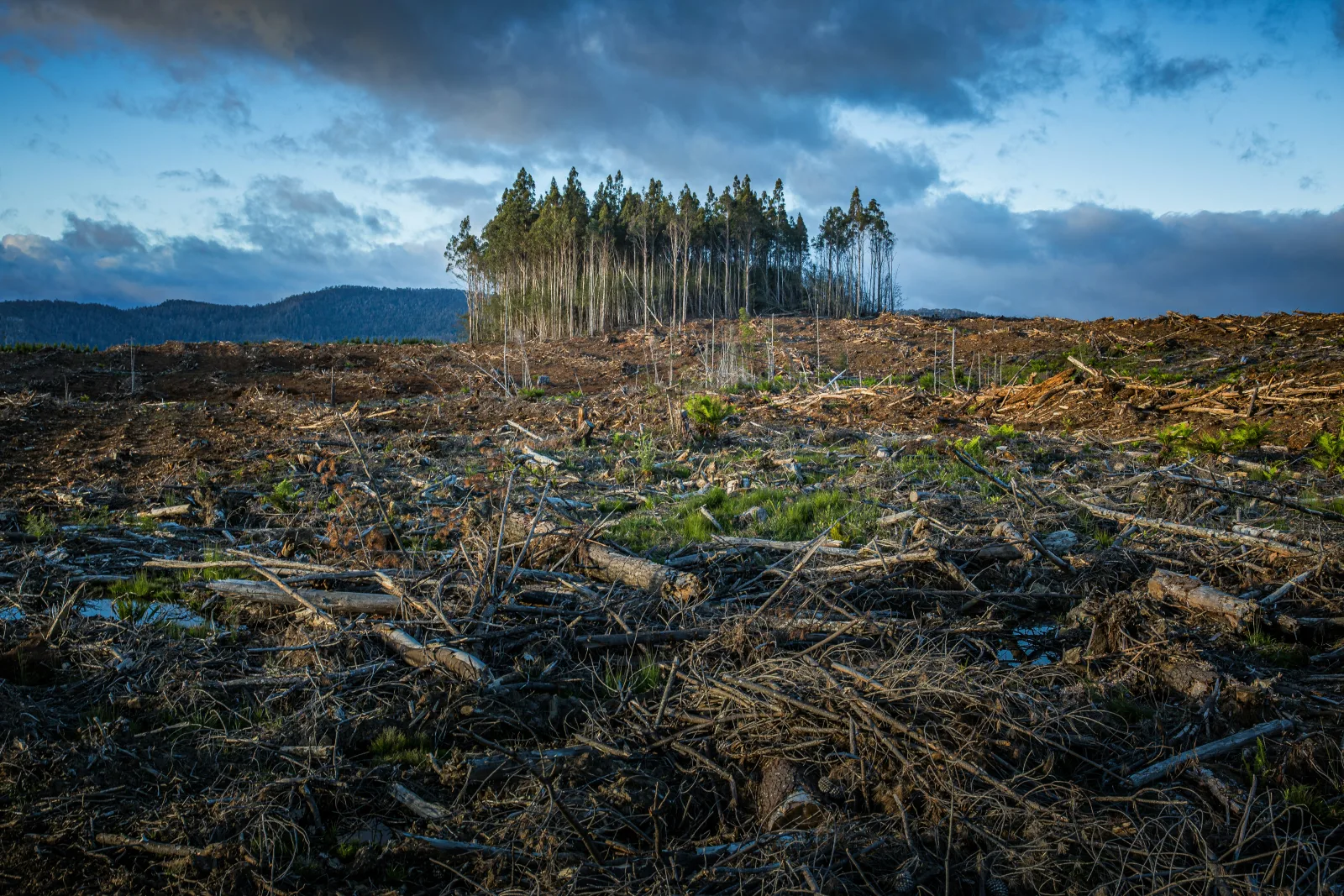
Under VM0044, the baseline scenario for waste biomass is one of two things: the biomass would have been left to decay naturally, or it would have been combusted for purposes other than energy production (such as open-field burning). Neither of these outcomes results in long-term carbon storage.
The project proponent must provide credible evidence to support the claimed baseline scenario. The methodology accepts several types of evidence:
- Annual government records about waste biomass disposal in the region.
- Records from a waste disposal facility that handled the same type of biomass.
- Records from a production facility that generated the biomass as a by-product.
If formal records are not available, the proponent may use data from existing literature about similar industries in the same region, existing survey data from comparable settings, or a survey conducted by the proponent specifically to establish the baseline.
The baseline scenario is documented once at the start of the project and does not change during the crediting period unless there is a fundamental change in the waste disposal practices in the region.
Additionality Overview
Section 7 of VM0044 requires that a project activity be additional. Additional means the emission reductions or removals from the project would not have occurred without the carbon finance provided by selling credits.
VM0044 uses a three-step standardized approach to demonstrate additionality. A project must pass all three steps. Failing any step means the project is not additional and is not eligible for crediting.
Key takeaway
The three additionality steps must all be passed, in order: Step 1 Regulatory Surplus, Step 2 Positive List, and Step 3 Investment Analysis. If a project fails any step, it cannot proceed to the next step and is not eligible for VCS crediting.
Analogy
Think of additionality like proving to an investor that you would not have started your business without their funding. You need to show three things: that the business is not legally required, that it is in a sector where similar businesses are rare, and that it would not be profitable without the investment. All three arguments together make the case that the funding made a real difference. Carbon additionality works the same way. Carbon finance must be the deciding factor, not a bonus on top of something that would have happened anyway.
Step 1: Regulatory Surplus
The first step requires the project proponent to demonstrate that the project activity is not mandated by any law or regulation. If a government rule already requires producers to convert waste biomass into biochar, then a project doing exactly that is not going beyond what is legally required and cannot claim additionality.
The proponent must comply with the regulatory surplus rules in the most recent version of the VCS Standard and VCS Methodology Requirements. These documents specify how to identify applicable regulations and how to show that the project goes beyond them.
If regulatory surplus is demonstrated, the project proceeds to Step 2. If not, the assessment ends and the project is not additional.
Step 2: Positive List
The second step uses the Activity Method. The concept is straightforward: if an activity type appears on the positive list, all projects of that type are automatically considered additional, provided they also pass the regulatory surplus test and the investment analysis.
For VM0044, the relevant activity on the positive list is the processing of waste biomass to biochar. This activity qualifies for the positive list because the global adoption rate of biochar production is well below the threshold set by the VCS Methodology Requirements.
The VCS threshold is 5 percent. If more than 5 percent of the maximum technically possible biochar production is already happening globally without carbon finance, the activity would no longer qualify as additional on the positive list. The methodology calculates this using the Activity Penetration metric (APy).
Activity Penetration
Activity Penetration
Percentage of maximum possible biochar production that is actually occurring in year y
Observed Adoption
Actual global biochar production in year y, in tonnes
Maximum Adoption Potential
Maximum theoretically possible biochar production in year y, in tonnes
Note: The result is multiplied by 100 to express as a percentage.
Worked example
The calculation in Appendix 1 of VM0044 uses the following data:
- Maximum Adoption Potential (MAPy): approximately 1,369,486,910 tonnes per year. This figure comes from FAO data: approximately 269 million tonnes of wood residues plus approximately 1.1 billion tonnes of crop residues available globally each year.
- Observed Adoption (OAy): approximately 773,787 metric tonnes of biochar produced globally per year. This figure is based on IBI 2015 data adjusted for growth rate and including reported Chinese production.
- APy = (773,787 / 1,369,486,910) x 100 = approximately 0.06 percent
This is far below the 5 percent threshold. It confirms that biochar production from waste biomass is still a very small fraction of what is technically possible globally. The activity qualifies for the positive list.
If the positive list conditions are met, the project proceeds to Step 3. If not, the assessment ends and the project is not additional.
Step 3: Investment Analysis
The third step requires the project proponent to demonstrate that the project activity would not be financially viable without carbon finance. This step uses the Verra tool VT0008 Additionality Assessment.
VT0008 offers two options for investment analysis:
- Option 1: Investment Comparison Analysis. This approach compares the internal rate of return (IRR) or net present value (NPV) of the project with and without carbon revenue. If the project is not financially attractive without carbon revenue and becomes viable only with it, the investment analysis supports additionality.
- Option 2: Benchmark Analysis. This approach compares the project's financial performance against a benchmark return expected for investments of similar risk in the same sector. If the project falls below the benchmark without carbon revenue, additionality is supported.
If the investment analysis confirms that the project would not proceed without carbon finance, the project passes Step 3 and is considered additional.
VT0008 requires the project proponent to build a financial model of the project activity. This model must include all capital costs, operating costs, and revenues from the sale of biochar and any co-products such as bio-oil or syngas. The model is run twice: once with carbon revenue included and once without. Under Option 1, the proponent calculates the IRR or NPV in both scenarios and compares them to the minimum acceptable return for this type of investment. If the project is not viable without carbon revenue (IRR below the hurdle rate, or NPV below zero), the analysis supports additionality. Under Option 2, the proponent compares the project's return to a published or industry-standard benchmark. The benchmark must be justified and appropriate for the region and sector. VT0008 also requires sensitivity analysis to show that the conclusions hold under reasonable variations in key assumptions such as biochar prices, energy costs, and production volumes.
What the Proponent Must Document
To satisfy the additionality requirements of VM0044, the project documentation must include four elements:
- Baseline scenario evidence: Credible records or surveys showing what would have happened to the waste biomass without the project. Government records, facility records, literature data, or a proponent survey are all acceptable.
- Regulatory surplus demonstration: Analysis showing that the project activity is not required by any applicable law or regulation, consistent with the current VCS Standard and VCS Methodology Requirements.
- Positive list confirmation: A statement confirming that the project meets all the applicability conditions of VM0044, which is the basis for the positive list claim. The activity penetration calculation from Appendix 1 (APy of approximately 0.06 percent) supports this claim.
- Investment analysis results: A financial model completed under VT0008, using either Option 1 or Option 2, showing that the project would not be financially viable without carbon revenue.
All four elements must be included in the Project Description document submitted for validation. The third-party validator will review each element before the project can be registered and begin generating credits.
Key Takeaways
- The baseline scenario describes what would have happened to waste biomass without the project - either natural decay or combustion without energy recovery
- Additionality requires passing three sequential steps: regulatory surplus, positive list, and investment analysis - failing any step disqualifies the project
- The activity penetration metric (APy) shows global biochar production is approximately 0.06% of maximum potential, far below the 5% positive list threshold
- Investment analysis via VT0008 must demonstrate the project is not financially viable without carbon revenue, using either IRR/NPV comparison or benchmark analysis
- Project documentation must include baseline evidence, regulatory surplus demonstration, positive list confirmation, and completed investment analysis results
Knowledge Check
Test what you just learned
4 questions · check each one as you go
What is the correct sequence of the three additionality steps in VM0044?
What is the approximate global activity penetration (APy) of biochar production calculated in VM0044 Appendix 1?
A project proponent claims that its rice straw feedstock would have decomposed anaerobically in flooded fields without the project. No formal records exist. What types of evidence does VM0044 accept to support this baseline scenario claim?
A biochar project passes Step 1 (Regulatory Surplus) but cannot demonstrate that its activity type meets the conditions of the Positive List in Step 2. What happens next?