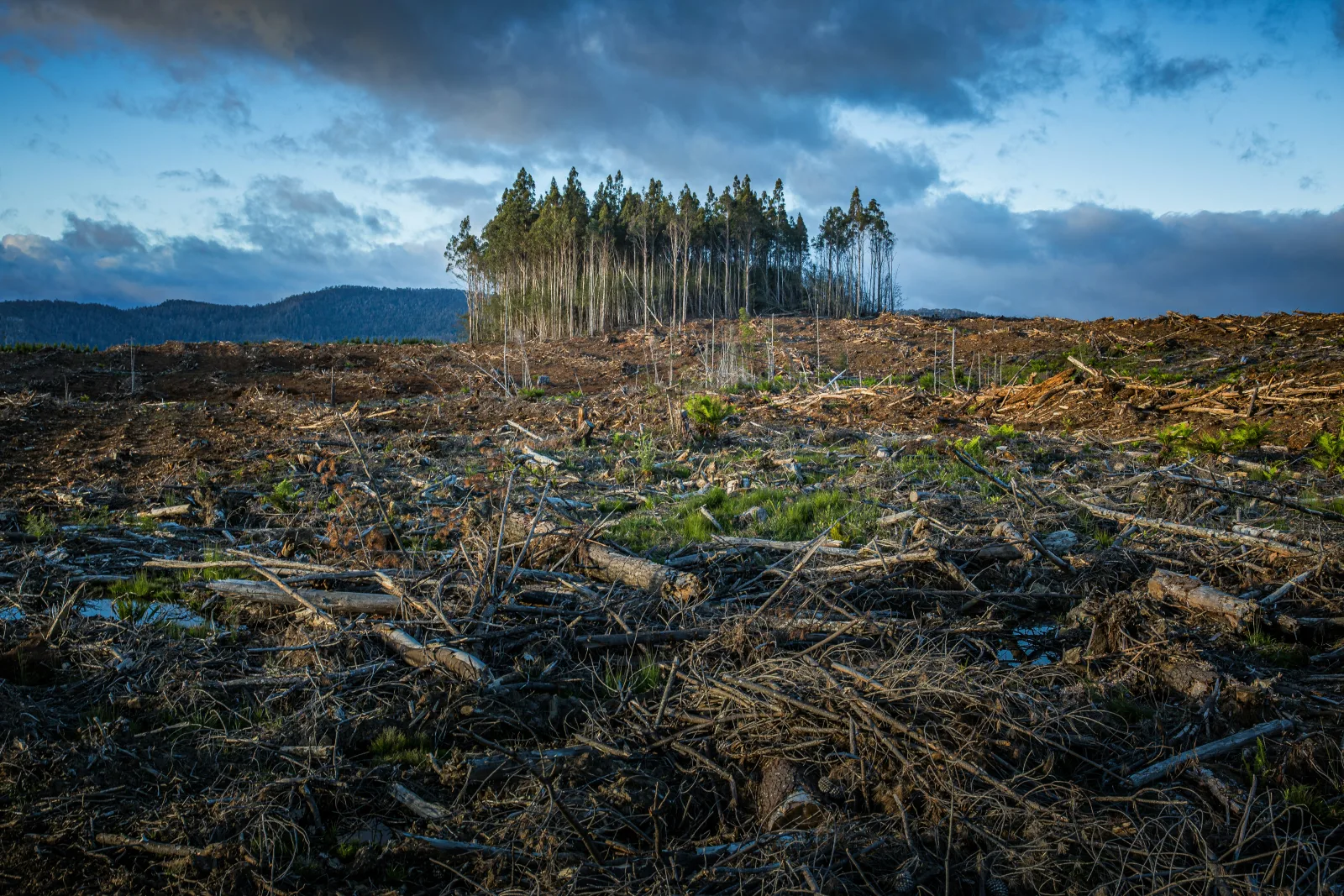
Not all biomass can safely be used as feedstock under the VM0044 methodology. The rules set strict criteria to guarantee that the biomass used is genuinely waste material and that its conversion into biochar represents a legitimate climate benefit. This lesson covers exactly who can supply feedstock, what specific types of biomass qualify, and the rigorous sustainability standards that apply.
The Four Core Feedstock Conditions (Condition 4)
Every single feedstock used in a VM0044 project must completely satisfy all four of these conditions simultaneously:
- Purely biogenic waste biomass (not purpose-grown): The biomass must strictly be a by-product, residue, or waste stream. Planting trees or specific crops with the primary intention of converting them to biochar is considered purpose-grown and is entirely ineligible.
- Would have decayed or been combusted without energy recovery: In the normal baseline scenario, the biomass must have been left to simply decompose or be burned without producing any useful energy. Biomass that was already being productively used for energy or other purposes cannot be diverted into biochar production and claimed as a new climate benefit.
- Not imported from other countries: The feedstock must be sourced domestically. Cross-border biomass imports are strictly prohibited. This rule intelligently prevents projects from drawing on biomass that could negatively affect land use or emissions in completely different countries.
- Must meet the sustainability criteria in Table 1: Every feedstock type also carries highly specific sustainability requirements that go well beyond the four general conditions.
Key takeaway
Feedstock must NOT be purpose-grown. It must strictly be waste or residue material that would have otherwise decayed or been burned without producing any useful energy. If even a single one of the four core conditions is not fully met, the feedstock is completely ineligible regardless of its type.
The Six Feedstock Sourcing Categories (Table 1)
VM0044 Table 1 clearly defines six broad categories of eligible feedstock, each with its own specialized sustainability requirements.
| Category | Key Sustainability Requirements | Example Feedstocks |
|---|---|---|
| A. Agricultural waste biomass | Must not reduce soil carbon or crop productivity. Without clear documentation, removal is capped at 50% of total residues. If from centralized processing, it must show baseline open burning without energy production. | Straw, leaves, stalks, husk, pomace, kernels, tree and vine pruning |
| B. Food processing residues | Must come directly from actual food processing facilities. The residue production rate per facility output must not have increased specifically to produce extra biochar. | Washing and peeling residues, expired food, coffee and tea processing waste, cocoa and tobacco residues |
| C. Forestry and wood processing | Forest wood must definitively prove sustainable sourcing and no deforestation (via management plans, FSC or PEFC certification). Processed timber for soil use must have completely no paint, solvent, or toxic contamination. | Sawmill off-cuts, sawdust, wood pallets, forest thinnings, diseased trees, wastepaper, cardboard |
| D. Recycling economy | Must strictly comply with IBI Testing Guidelines or EBC Production Guidelines for heavy metals and contaminants. Must strictly be the non-fossil fraction of industrial or municipal waste. | Urban green cuttings, biosolids from wastewater treatment, paper mill sludge |
| E. Aquaculture plants | Must strictly be by-products of aquaculture. Invasive species must not have been purposely introduced just to qualify. Only Plantae kingdom organisms are purely eligible. | Seaweed, algae waste, water hyacinth and other aquatic invasive plant species |
| F. Animal manure | Must strictly be by-products of legitimate animal husbandry operations. | Waste from swine, cattle, horse, and poultry farms |
| G. High-carbon fly ash (HCFA) | Must strictly be no more than 5% of annual waste biomass throughput. An affirmative technology must extract biochar before complete combustion. No fossil fuel substitution allowed for lost caloric value. | By-products of biomass cogeneration facilities |
A. Agricultural Waste Biomass
Agricultural residues are undeniably among the most common feedstocks for biochar projects. They generally come from two main types of sources:
- From fields directly: The project must convincingly demonstrate that removing residues will not negatively reduce soil organic carbon stocks or harm crop productivity. In many farming systems, a healthy portion of straw or stalks is naturally left on the field to maintain soil quality. If there is absolutely no documentation proving that removal is safe, the project is strictly capped at collecting no more than 50% of total available residues. This smart cap effectively protects soil health.
- From centralized biomass processing: Great examples include rice mills or large grain processing facilities. Here, the biomass is already fully separated from the land. The primary sustainability requirement here is to definitively show that in the standard baseline scenario, the residue was traditionally burned completely without producing energy (such as open field burning of stubble).
B. Food Processing Residues
These materials clearly come from active facilities that extensively process food for human or animal consumption. The absolute key sustainability check is ensuring that the amount of residue generated per unit of facility output has not mysteriously increased specifically because of the biochar project. This strictly prevents a food processor from artificially generating extra waste just to sell as feedstock.
Excellent examples easily include the liquid and solid waste from extensively washing and peeling fruits or vegetables, expired food products, and processing residues from the coffee, tea, cocoa, and tobacco industries.
C. Forestry and Other Wood Processing
Procuring wood from active forests logically raises serious additional concerns about potential deforestation and highly unsustainable harvesting practices. VM0044 firmly requires that all forest-sourced wood be definitively proven to come from sustainably managed forests. Highly acceptable evidence securely includes:
- A officially certified sustainable forest management plan.
- PEFC (Programme for the Endorsement of Forest Certification) or FSC (Forest Stewardship Council) official certification.
- Complete compliance with standard CDM Executive Board document EB23 (specifically Annex 18), which clearly defines truly renewable biomass.
Whenever processed timber is actively used in direct soil applications, it absolutely must be completely free from toxic paint residues, harsh solvents, or any other dangerous chemical contaminants that could physically harm the soil or vulnerable crops.
D. Recycling Economy
This broad category thoroughly covers biomass from complex urban and industrial waste streams. Because these massive streams can frustratingly contain dangerous heavy metals, toxic plastics, or other severe contaminants, the methodology strictly requires full compliance with rigid heavy metal and contaminant thresholds clearly set by the International Biochar Initiative (IBI) Testing Guidelines or the European Biochar Certificate (EBC) Production Guidelines.
Crucially, only the absolute non-fossil fraction of the waste can properly be counted. Mixed waste streams that blatantly contain plastics or petroleum-derived materials simply cannot have those dangerous components legally included in the final feedstock calculation.
E. Aquaculture Plants
Valuable seaweed, algae, and aquatic plant residues from large fish farms or marine cultivation operations perfectly qualify under this unique category. One incredibly important rule is that highly invasive aquatic plant species (such as the aggressive water hyacinth) absolutely must not have been deliberately introduced to any water body simply to qualify as cheap feedstock. Secondly, the species absolutely must be directly from the true plant kingdom (Plantae), and entirely not animals or microorganisms.
F. Animal Manure
Abundant manure from large livestock operations is an inherently valuable feedstock completely because it would normally decompose anaerobically and release substantial methane (a powerfully potent greenhouse gas). Cleanly converting this manure to highly stable biochar successfully prevents those terrible methane emissions and safely stores the precious carbon instead. The feedstock must rigorously remain a genuine, organic by-product of normal animal husbandry, and never specially sourced from extra livestock raised specifically or primarily just to generate extra manure production.
G. High-Carbon Fly Ash from Biomass (HCFA)
This remains a highly specialized and strict feedstock category. When raw biomass burns inside a massive cogeneration facility, absolutely not all the carbon is fully oxidized perfectly. Some partially converted black carbon exits rapidly as fly ash. If a specific affirmative technology (such as a modern carbon trap or advanced separator sector) is actively used to successfully capture this partially converted biochar directly before full combustion occurs, that specific material may successfully be eligible.
Two incredibly strict limiting rules heavily apply:
- Targeted HCFA absolutely must represent strictly no more than 5% of the massive total annual waste biomass throughput specifically from that bioenergy facility.
- The careful project absolutely must clearly demonstrate that zero extra fossil fuel was ever added simply to cheaply replace the lost caloric value of the valuable biomass that was actively diverted just before combustion.
Additional Applicability Conditions (Conditions 5 through 8)
- Condition 5, Biochar quality standards: All biochar actively produced from single or highly mixed feedstocks must rigorously comply directly with either the global IBI Biochar Testing Guidelines or the stringent EBC Production Guidelines. These international purity standards strictly specify all acceptable final levels of dangerous heavy metals, polycyclic aromatic hydrocarbons (PAHs), and other scary contaminants.
- Condition 6, Transportation distance and mode: Heavy feedstock and finished biochar can gracefully be transported up to exactly 200 kilometers by literally any normal vehicle type completely without triggering complex additional emissions accounting. Significantly beyond exactly 200 kilometers, strictly only standard road transport is fully permitted, and all extra emissions absolutely must be cleanly calculated carefully using the exact CDM TOOL12 methodology.
- Condition 7, Mineral additives: Processed biochar products may actively include highly helpful mineral additives such as agricultural lime, raw rock minerals, or clean ash simply to significantly improve their final soil performance perfectly. If these minor additives securely represent exactly 10% or strictly less of the final total product mass, zero additional laboratory testing is legally required. If they heavily exceed exactly 10% of the total mass unfortunately, fresh laboratory tests absolutely are strictly required directly to correctly characterize the final product.
- Condition 8, Recognized certification schemes: Legal compliance precisely with all the complex sustainability criteria strictly in Table 1 can clearly be successfully demonstrated completely through highly recognized third-party certification schemes directly. Excellent examples easily include the reputable Roundtable on Sustainable Biomaterials (RSB), the trusted International Sustainability and Carbon Certification (ISCC), or simply any similar scheme officially approved globally by the European Union securely for their renewable energy directives specifically. Currently holding such a trusted certificate thoroughly provides excellent evidence of strict sustainability compliance entirely without annoyingly requiring massive project-specific documentation purely for every single tiny criterion.
Appendix 2 of the VM0044 methodology generously provides highly practical guidance entirely on how to legally and sufficiently prove that a specific feedstock is genuinely pure waste biomass entirely and completely not purposely grown. There generally are three distinct safe approaches.
Approach 1: Identified source with zero baseline use: The project proponent can easily identify the specific physical source precisely of the massive biomass (for clear example, a carefully named farm or active processing facility explicitly) and clearly demonstrate conclusively that in the actual baseline, the biomass frustratingly had absolutely no productive primary use entirely. It simply was left carelessly to sadly decay naturally, burned messily directly in the open, or essentially disposed of routinely simply as useless waste perfectly. Proper documentation could securely and easily include clear photographs, tight legal contracts, or accurate official waste management records.
Approach 2: Identified source featuring very partial baseline use: Some raw feedstock arguably may clearly have essentially had a highly partial, limited baseline useful use strictly, clearly such precisely as easily being sold cheaply broadly as low-grade raw fuel or cheap animal feed, but entirely specifically in measured quantities vastly less strictly than the giant total readily available simply. The project can simply use the excess wasted quantity purely that fundamentally was previously fully unused entirely.
Approach 3: Unidentifiable source explicitly from a large residue market: In some challenging cases, raw biomass simply is actively purchased cheaply totally from a massive, active, generic commodity market completely for loose residues absolutely (such precisely as an incredibly massive regional loose straw market totally). The individual manual micro sources simply fundamentally cannot realistically all be identified perfectly. In this tricky case, the careful project proponent absolutely must rigorously deliberately provide solid market-level comprehensive evidence firmly that the raw material actively cleanly traded widely simply in that large market specifically is deeply genuinely pure residue explicitly or true basic waste entirely.
All absolutely three trusted approaches completely rigidly require incredibly solid documentation explicitly and comprehensively are heavily subjected routinely strictly to intensive trusted third-party verification consistently.
Worked example
A wildly popular massive coffee roasting company naturally constantly generates incredibly significant massive quantities entirely of loose coffee chaff (the extremely thin papery dry skin physically removed safely strictly during roasting exactly) completely and tons of heavy wet spent coffee grounds explicitly totally from its massive operations. In the absolute standard baseline constantly, both specific raw materials routinely absolutely were directly heavily sent strictly totally to a local dirty landfill directly.
A smart VM0044 project explicitly collects carefully these exact food processing residues (officially Category B entirely), explicitly converts all of them correctly purely to highly pure biochar simply perfectly at a highly new nearby entirely greenfield safe pyrolysis facility directly simply (strictly less than exactly 200 kilometers away), and actively fully explicitly applies carefully the pure biochar entirely totally directly to local massive lush coffee plantation soils heavily cleanly. The actual raw residue massive generation basic rate completely cleanly at the massive roasting active facility basically entirely is exactly properly documented deeply legally simply to strictly strictly ensure it has absolutely not increased purely to simply generate extra raw feedstock purely. The fresh biochar carefully is explicitly tested entirely securely safely to carefully confirm exactly honestly effectively definitely explicitly confidently it meets exactly standard IBI global standards perfectly totally strictly clearly fully completely entirely directly before active final real physical application happens.
Key Takeaways
- All feedstock must satisfy four core conditions simultaneously: biogenic waste only, would have decayed or been burned without energy recovery, domestically sourced, and meets Table 1 sustainability criteria
- Six feedstock categories exist (A through G), each with specialized sustainability requirements - agricultural waste has a 50% removal cap if no documentation proves safe removal
- Food processing residues must not show increased waste generation rates specifically to supply the biochar project
- Forest-sourced wood requires proof of sustainable harvesting via FSC, PEFC certification, or compliant management plans
- Recycling economy feedstocks must comply with IBI or EBC heavy metal and contaminant thresholds, and only the non-fossil fraction qualifies
- Third-party certification schemes like RSB or ISCC can demonstrate sustainability compliance without project-specific documentation for every criterion
Knowledge Check
Test what you just learned
3 questions · check each one as you go
Which of the following is NOT one of the four core feedstock eligibility conditions under VM0044 Condition 4?
If an agricultural waste biomass project lacks documentation proving that residue removal will not reduce soil carbon, what is the maximum percentage of total residues that can be collected?
Under VM0044, what is the maximum percentage of annual waste biomass throughput that high-carbon fly ash from biomass (HCFA) can represent?