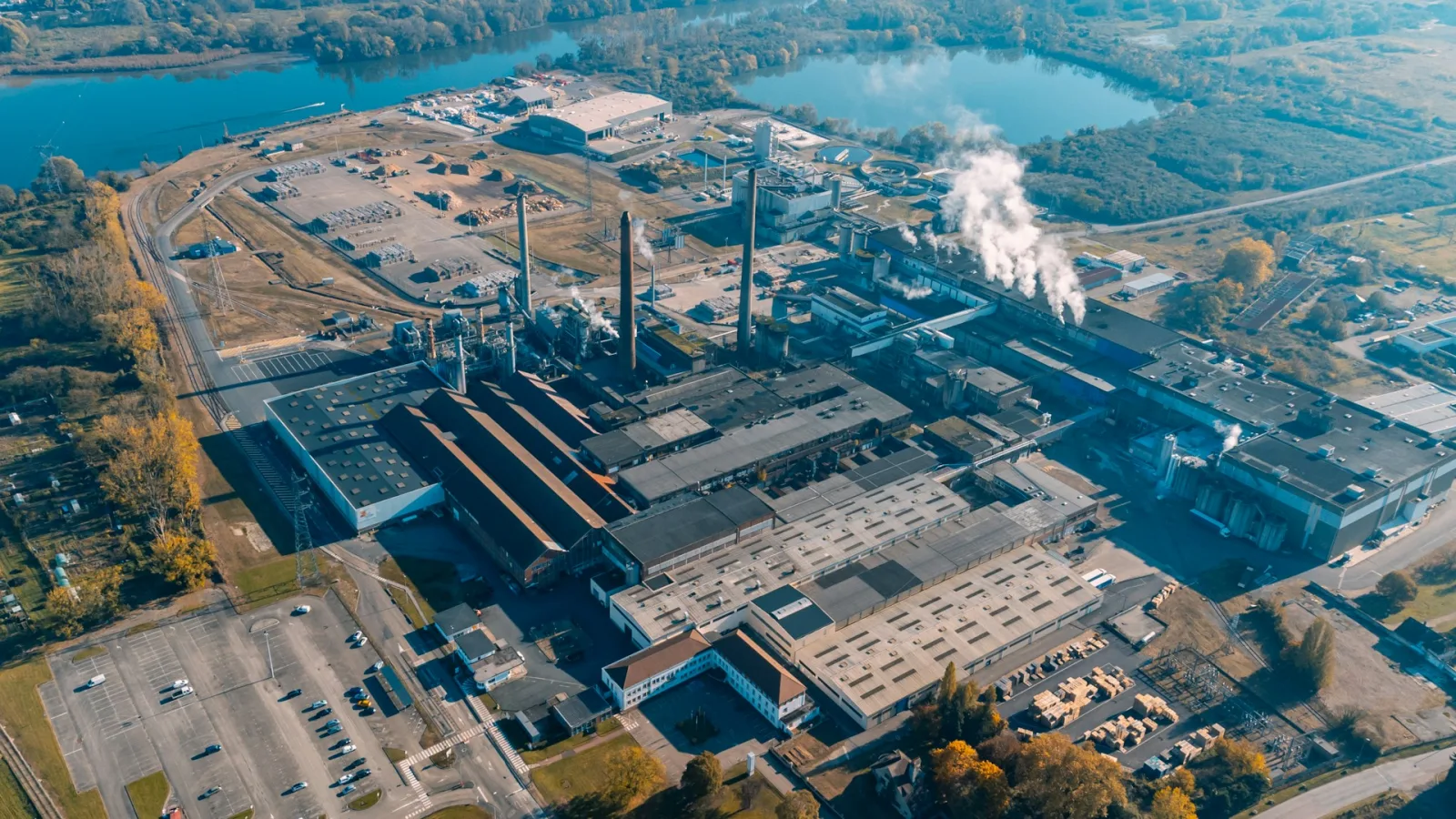
Category 10 — Processing of Sold Products covers GHG emissions from the processing of intermediate products sold by the reporting company. This category applies specifically when a company sells a product that its downstream customers (manufacturers or processors) further transform before it reaches the end consumer.
Who Does Category 10 Apply To?
Category 10 is relevant only for companies that sell intermediate inputs - materials or components that are not used directly by the end consumer but are instead further processed. Examples:
- A steel producer selling steel coil to an automotive manufacturer who stamps, cuts, and welds it into car parts
- A chemical company selling ethylene to a plastics manufacturer who polymerises it into resins
- A semiconductor manufacturer selling wafers to a chip packager
- A flour mill selling flour to a bakery
Category 10 does not apply to:
- Companies that sell final consumer products (no downstream processing)
- Companies that sell raw commodities used entirely in Category 1 by their customers
- Service companies (no physical product to process)
Key takeaway
Category 10 captures the energy and process emissions that occur in the downstream manufacturer's facility when they transform the company's sold intermediate product. The reporting company is responsible for these emissions because its product is the input to that manufacturing process.
Calculation Methods
Method 1: Site-Specific Method (Most Accurate)
The company collects actual processing energy and emissions data from its downstream customers. This requires engagement with the customers who process the sold product.
Method 2: Average-Data Method
Uses industry-average data on energy intensity of processing operations per unit of material processed (e.g., kWh per tonne of steel fabricated, kWh per tonne of plastic compounded).
Category 10 - Average-Data Method
Category 10 Emissions
Total processing emissions from sold intermediate products, in tCO₂e
Mass Sold
Mass of intermediate product sold, in tonnes
Energy Intensity
Average processing energy per tonne of material, in kWh/tonne
Grid Emission Factor
Emissions per MWh of grid electricity, in tCO₂e/MWh (divide by 1,000 to convert kWh to MWh)
Method 3: Spend-Based Method
Uses EIO factors per unit of downstream processing spend. Least accurate.
Emissions Allocation
A key challenge in Category 10 is that a downstream processor typically uses the company's product as only one of many inputs. For example, a car manufacturer uses steel, aluminium, glass, plastics, rubber, and electronics. How much of the total manufacturing energy should be attributed to the steel supplier?
The standard recommends allocating processing emissions in proportion to the mass or physical quantity of the reporting company's product relative to all inputs processed. If steel represents 60% of the mass of inputs to the pressing operation, 60% of the pressing energy is attributed to the steel supplier's Category 10.
Analogy
Think of Category 10 as the "downstream manufacturing tax" on selling intermediate goods. A steel company is not just responsible for making the steel - it is responsible for the downstream energy consumed to transform that steel into useful shapes. By measuring Category 10, the steel company gains insight into which downstream fabrication processes are most energy-intensive and may be able to support customers in adopting more efficient processes.
Practice calculation
A chemical company sells 1,000 tonnes of plastic resin pellets per year. Downstream customers injection-mould the resin into consumer products. The average energy intensity of injection moulding is 0.8 MWh/tonne of resin processed. The grid emission factor is 0.233 tCO₂e/MWh. What are the Category 10 emissions?
Materiality Considerations
Category 10 is typically only material for companies selling significant volumes of intermediate products into energy-intensive processing operations. For most retailers, service companies, and final product manufacturers, Category 10 is zero (they sell to end consumers, not processors). Companies should document this exclusion clearly if Category 10 does not apply to their business model.
Consider the full value chain of an automotive steel panel:
- Iron ore mining and coking coal extraction - partially in steel company's Category 1
- Blast furnace steelmaking - steel company's Scope 1 and 2
- Hot rolling and cold rolling at steel mill - steel company's Scope 1 and 2
- Stamping and pressing at automotive OEM - steel company's Category 10
- Welding and assembly at automotive OEM - still partly Category 10
- Vehicle use by consumer - automotive company's Category 11
The steel company "owns" the processing emissions at the OEM because it was the steel company's product that was being transformed. This is why Category 10 requires collaboration with downstream customers - it's genuinely their emissions data that the upstream seller needs to account for.
Key Takeaways
- Category 10 applies only to companies selling intermediate products that downstream customers further process before reaching end consumers
- Processing emissions are allocated based on the mass or physical quantity of the reporting company's product relative to all inputs processed
- The average-data method uses industry-average processing energy intensity (e.g., kWh per tonne of material processed) multiplied by grid emission factors
- Category 10 is zero for companies selling final consumer products, services, or raw commodities - document this exclusion clearly
- Measuring Category 10 gives upstream sellers insight into which downstream fabrication processes are most energy-intensive, enabling collaborative efficiency improvements
Knowledge Check
Test what you just learned
3 questions · check each one as you go
Category 10 (Processing of Sold Products) applies to which type of company?
When allocating Category 10 processing emissions, what does the GHG Protocol recommend as the primary allocation basis?
A company sells 500 tonnes of chemical resin to a processor. The processor's total inputs are 2,500 tonnes including all materials. The processing operation emits 1,000 tCO₂e. What is allocated to the resin company's Category 10?