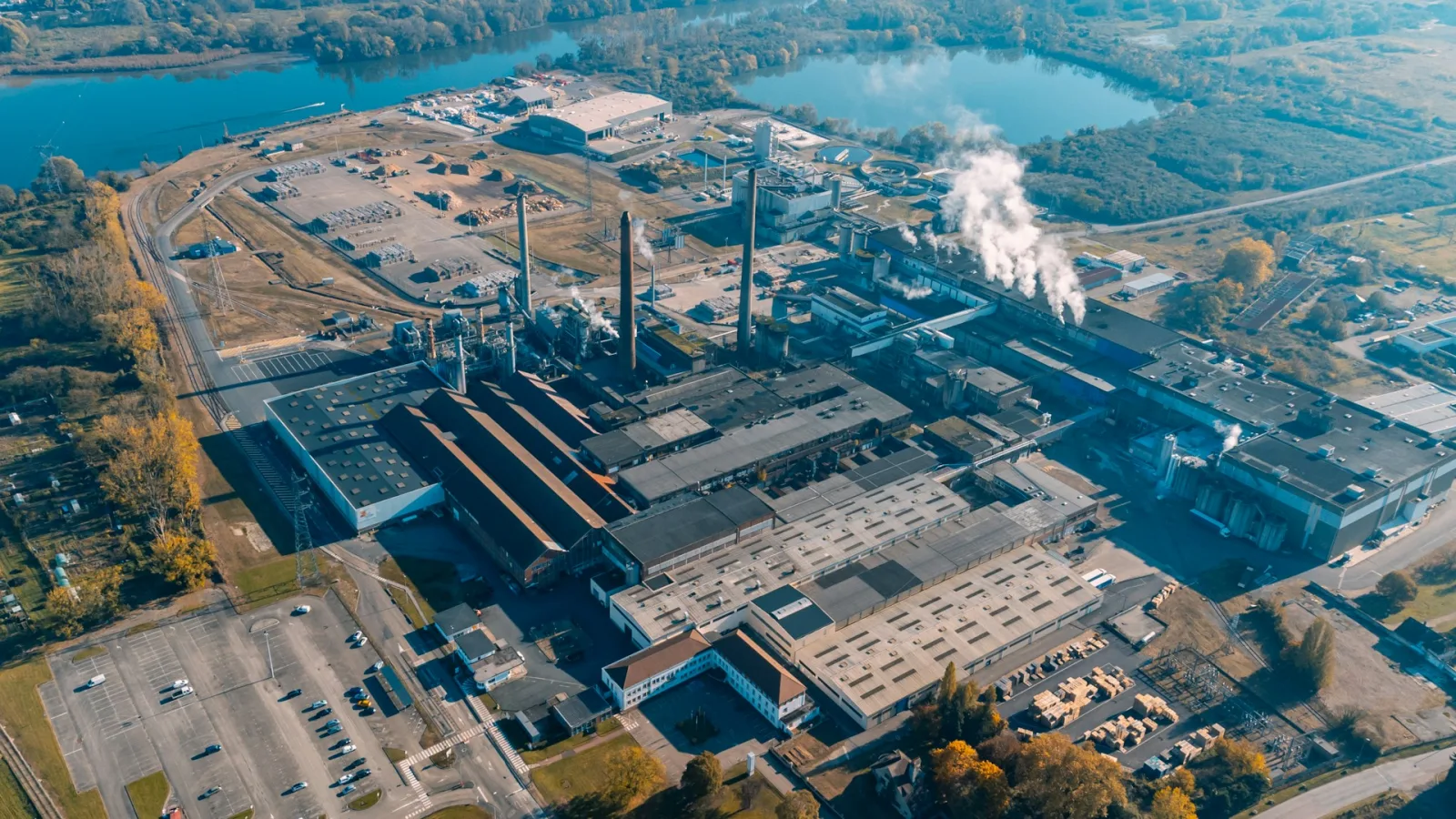
Category 5 — Waste Generated in Operations covers GHG emissions from third-party disposal and treatment of solid waste and wastewater generated in the company's own operations. The key boundary point: only the emissions at the disposal facility are counted - not the emissions from transporting waste (which belong in Category 4) and not emissions from processing within the company's own boundary (which are Scope 1).
What Is Included
Category 5 covers waste generated by the reporting company's operations and sent to third-party facilities for disposal, including:
- Landfill: Decomposition of organic waste generates methane (a potent GHG)
- Incineration without energy recovery: Full oxidation of waste to CO₂
- Incineration with energy recovery (waste-to-energy): Net emissions after crediting recovered energy
- Composting: Aerobic decomposition produces CO₂ and some N₂O
- Anaerobic digestion: Biogas (mainly CH₄) captured and used as energy; residual emissions counted
- Recycling: Energy used to sort and process recyclable materials
- Wastewater treatment: Biological treatment produces CH₄ and N₂O
Key takeaway
Category 5 uses a "polluter pays" accounting approach - the company that generates the waste is responsible for the disposal emissions, even though those emissions physically occur at a third-party facility. This is consistent with the principle that companies should account for emissions they cause throughout the value chain.
What Is Not Included
- Emissions from transporting waste from the company's facility to the disposal site (counted in Category 4)
- Emissions from waste treatment at company-owned facilities (Scope 1)
- Emissions from processing or disposing of products after sale (Category 12 - End-of-Life Treatment of Sold Products)
Calculation Methods
Method 1: Waste-Type-Specific Method (Most Accurate)
Requires detailed data on waste composition (e.g., % organic, % plastics, % metals) and treatment method. Paired with waste-type and treatment-specific emission factors.
Category 5 - Waste-Type-Specific Method
Category 5 Emissions
Total emissions from waste disposal across all waste streams, in tCO₂e
Waste Mass
Mass of each waste type sent to disposal, in tonnes
Waste-Type Emission Factor
tCO₂e per tonne for the specific waste type
Treatment Method Factor
Multiplier reflecting the disposal method (landfill, incineration, composting, etc.)
Method 2: Average-Data Method
Uses an average emission factor per tonne of total solid waste, regardless of composition or treatment. Simpler but less accurate.
Category 5 - Average-Data Method
Category 5 Emissions
Total emissions from waste disposal, in tCO₂e
Total Waste
Total mass of waste generated and sent for disposal, in tonnes
Average Waste Emission Factor
tCO₂e per tonne of mixed waste (industry average)
Method 3: Spend-Based Method
Applies EIO emission factors per unit of spend on waste management services. Suitable for initial screening.
Emission Factors by Waste Type and Treatment
| Waste Type / Treatment | Typical Emission Factor (tCO₂e/tonne) |
|---|---|
| Municipal solid waste - landfill | 0.44-0.58 |
| Food waste - landfill | 0.68-0.94 |
| Food waste - anaerobic digestion | 0.015-0.025 |
| Mixed waste - incineration (no recovery) | 0.21-0.44 |
| Mixed waste - composting | 0.04-0.07 |
| Cardboard / paper - recycling | 0.02-0.04 |
| Plastics - recycling | 0.02-0.05 |
Practice calculation
A factory generates 50 tonnes of food waste per month that is sent to landfill. The emission factor for food waste in landfill is 0.72 tCO₂e/tonne. What are the annual Category 5 emissions from this waste stream?
Wastewater Treatment
For wastewater, emission factors depend on:
- Volume of wastewater generated (m³)
- Organic load (chemical oxygen demand, or COD, in kg)
- Treatment type: aerobic treatment produces less CH₄ than anaerobic; untreated discharge in warm climates produces the most
Category 5 - Wastewater Methane Emissions
Wastewater CH₄ Emissions
Methane emissions from wastewater treatment, converted to tCO₂e
COD Removed
Mass of chemical oxygen demand removed during treatment, in kg
Max CH₄ Capacity
Maximum methane production capacity, in kg CH₄ per kg COD
Methane Correction Factor
Fraction of maximum CH₄ actually produced, based on treatment type (0-1)
CH₄ Emission Factor
tCO₂e per kg of methane emitted (based on GWP)
Reduction Strategies
Measuring Category 5 emissions reveals opportunities to:
- Reduce waste generation at source (lean manufacturing, process efficiency)
- Divert organic waste from landfill to anaerobic digestion or composting
- Increase recycling rates to shift from landfill and incineration to lower-emission pathways
- Engage waste contractors to improve reporting on disposal method splits
Analogy
Category 5 is like the exhaust pipe of a company's operations. Even if everything inside the factory runs cleanly, what leaves as waste still has a climate impact. Landfill is the dirtiest exhaust - organic waste slowly releases methane for decades. Recycling and composting are the cleanest outlets. Measuring the exhaust is the first step to cleaning it up.
Landfill emission factors vary significantly by climate and landfill management. The IPCC First Order Decay model accounts for the time it takes for organic carbon to decompose and the fraction that is captured or oxidised. Managed landfills with gas capture systems have much lower net emissions than unmanaged open dumps. When selecting emission factors, companies should match the factor to the actual type of disposal facility used - a global average factor can significantly misrepresent emissions for companies whose waste goes to well-managed (captured gas) or poorly managed (open dump) facilities.
Key Takeaways
- Category 5 covers emissions at third-party disposal facilities from waste your operations generate - using a 'polluter pays' accounting approach
- Only disposal-site emissions count in Category 5 - waste transport is Category 4, and on-site waste treatment is Scope 1
- Diverting food waste from landfill to anaerobic digestion can reduce disposal emissions by up to 97%
- The waste-type-specific method is most accurate, pairing waste composition data with treatment-specific emission factors
- Match emission factors to the actual disposal facility type - managed landfills with gas capture have far lower emissions than unmanaged open dumps
Knowledge Check
Test what you just learned
3 questions · check each one as you go
Category 5 covers waste generated in operations. Which of the following is EXCLUDED from Category 5?
Which end-of-life treatment method typically produces the highest GHG emissions per tonne for organic waste?
A factory sends 80 tonnes of mixed waste to landfill with an emission factor of 0.50 tCO₂e/tonne. What are the Category 5 emissions?